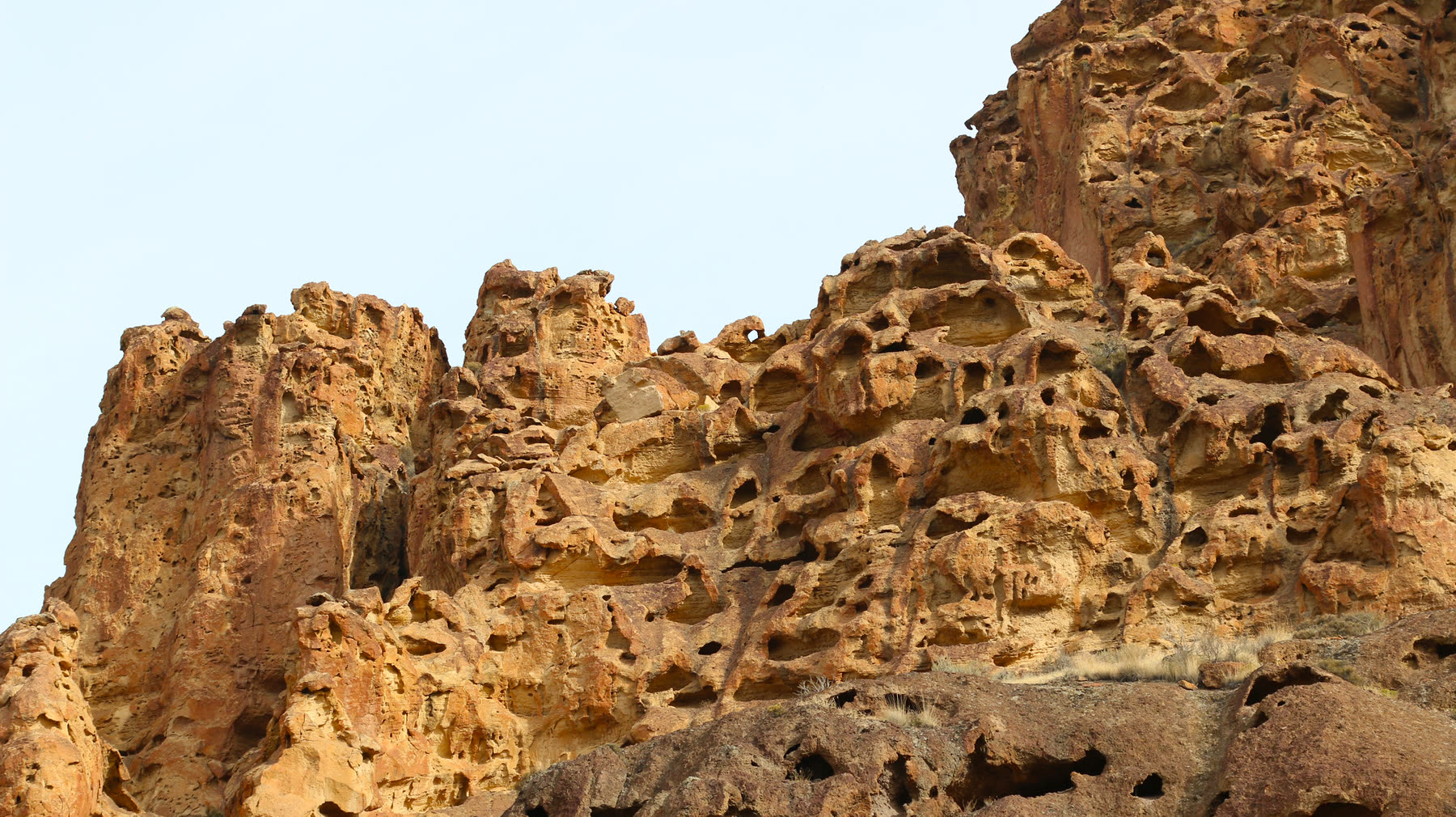
Leslie Gulch
Nothing on the drive prepares you for Leslie Gulch. The sagebrush steppe suddenly cracks open into a canyon of honeycombed, wind-sculpted towers — volcanic ash-flow tuff in shades of gold, rust, and rose — rising hundreds of feet on both sides of the road. Photographers compare it to a small, private Cappadocia. Most Oregonians have never heard of it.
The bighorns
Leslie Gulch is home to the largest herd of California bighorn sheep in the country — more than 200 animals. Watch the skyline ridges and talus slopes, especially early and late in the day; binoculars turn a good visit into a great one. The area is managed to protect the herd, so keep dogs leashed and stay on established roads and trails.
Seeing it
The gravel road runs the length of the gulch and dead-ends at Slocum Creek on the shore of Owyhee Reservoir — a boat launch, a primitive campground, and swimmable water in summer. Side canyons like Juniper Gulch make superb short hikes into slots and amphitheaters of stone.
Getting there: the classic approach is via Highway 201 to Succor Creek Road, then the signed Leslie Gulch turnoff; from Jordan Valley, take US-95 north and follow the signed gravel roads west. Either way the last stretch is well-graded gravel, passable to most passenger cars in dry weather — but treat it with respect when wet, and carry water and a real spare.
Leslie Gulch pairs perfectly with Succor Creek State Natural Area for a full day out of Jordan Valley — and you’ll want the early start that comes from staying in town the night before: a full-hookup site at Sunny Ridge RV Park or a room at the Basque Station Motel puts you at the gulch by first light, when the bighorns are moving.